As a member of the Association of Mary Queen of All Hearts, the Miraculous Medal and the Brown Scapular hold a very special place in my spiritual life. Wearing them has become a cherished devotion I am deeply attached to — a practice I have grown so accustomed to that I naturally feel incomplete whenever I am without them. This is true of many other Catholics who have developed a deep love for these powerful sacramentals of the Church.
This Miraculous Medal happens to be one of the most beloved sacramentals in the Catholic Church and is worn by millions of Catholics across the world. This small medal carries deep spiritual meaning, rich symbolism, and a powerful reminder of the Blessed Virgin Mary’s maternal care for the Church.
Yet, many Catholics know very little about its origin, meaning, or proper use. Some even mistakenly think it is a magical object.
In this article, we explore fifteen important things every Catholic should know about the Miraculous Medal, drawing from authentic Catholic teaching, sacred tradition, and historical accounts connected with the apparitions received by Saint Catherine Labouré.
1. The Miraculous Medal is a Sacramental, Not a Sacrament
The Miraculous Medal is a sacramental instituted by the Church to help dispose the faithful to receive God’s grace more fruitfully. Unlike the seven sacraments which were instituted directly by Christ, sacramentals are sacred signs established by the Church for spiritual benefit.
The Catechism of the Catholic Church explains that sacramentals prepare people to receive grace and help sanctify various circumstances of life. The power of the Miraculous Medal therefore does not come from the metal itself, but from God acting through the prayers, faith, and devotion of believers. So yes miracles happen when one use the sacramental, but the miracles stems from the prayers of the Church, the intercession of the Blessed Virgin Mary, and the faith of the user, not magical powers.
For more on what sacramentals are, read our earlier post: https://www.tabssacramentals.com.ng/what-are-sacramentals-in-the-catholic-church/
To understand the differences between sacramentals and sacraments, see our earlier post: https://www.tabssacramentals.com.ng/sacraments-vs-sacramentals/
2. The Medal Originated From Apparitions to Saint Catherine Labouré
The Miraculous Medal traces its origin to apparitions of the Blessed Virgin Mary received by Saint Catherine Labouré, a humble Daughter of Charity in Paris, France.
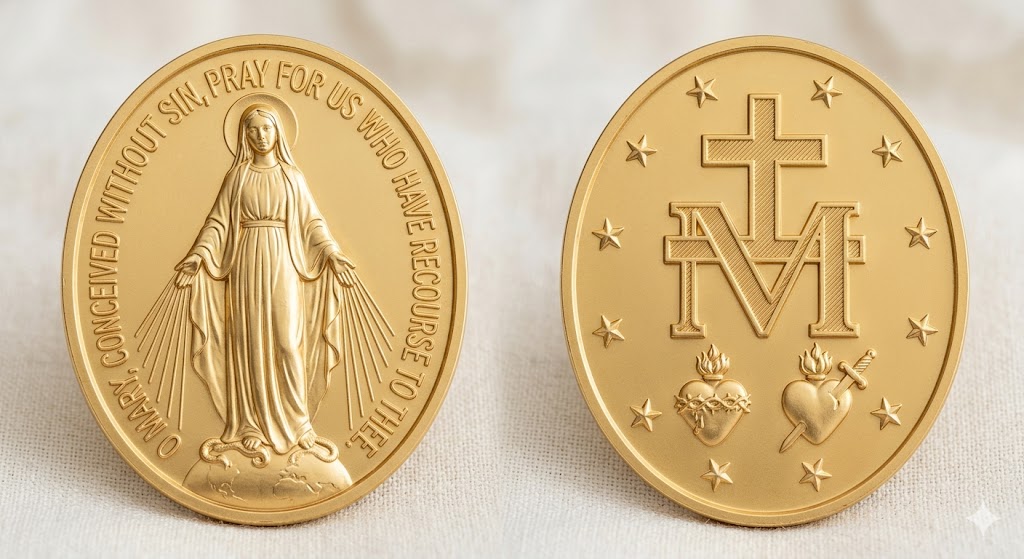
In 1830, Our Lady appeared to Saint Catherine in the convent chapel on Rue du Bac. During one of these apparitions, Catherine saw the Blessed Virgin standing upon a globe with rays of light streaming from her hands. Around the vision appeared the words:
“O Mary, conceived without sin, pray for us who have recourse to thee.”
Our Blessed Mother Mary instructed Catherine to have a medal struck according to this vision, promising special graces for those who would wear it with devotion.
3. The Medal Became Known as “Miraculous” Because of Extraordinary Conversions and Healings
The Church did not originally call it the “Miraculous Medal.” After the medal was distributed, numerous reports of conversions, spiritual favors, healings, and answered prayers began to spread.
Many people testified to experiencing deeper faith, protection, miracles, repentance, and peace through devotion connected with the medal. Because of these extraordinary favors, Catholics gradually began referring to it as the “Miraculous Medal.”
The Church does not teach that every wearer will automatically receive miracles. Rather, the medal is a reminder to trust in God and seek the intercession of the Blessed Virgin Mary.
4. The Words on the Medal Defend the Immaculate Conception
One of the most important inscriptions on the medal reads:
“O Mary, conceived without sin, pray for us who have recourse to thee.”
This statement beautifully reflects the Church’s belief in the Immaculate Conception of our Blessed Mother — that by a singular grace of God, the Blessed Virgin Mary was preserved free from original sin from the first moment of her conception.
Remarkably, the apparitions occurred decades before the dogma of the Immaculate Conception was formally proclaimed by Pope Pius IX in 1854.
5. The Rays from Mary’s Hands Symbolize Grace
In the apparition, Saint Catherine saw rays of light flowing from the Blessed Virgin’s hands.
Our Lady explained that these rays symbolize the graces she obtains from God for those who ask with confidence and faith.
Some rays appeared dim or absent. According to Saint Catherine’s account, these represented graces people fail to ask for. As Catholics, we are encouraged to confidently approach God in prayer through Our Lady’s maternal intercession.
6. The Serpent under Mary’s Feet Represents Victory over Sin and Satan
On the front of the medal, Mary stands upon a serpent.
This imagery recalls Genesis 3:15, where God speaks of the enmity between the woman and the serpent. It also reflects the Church’s understanding of Mary’s cooperation in God’s plan of salvation through her obedience and holiness.
The image reminds us as Catholics that through Christ’s victory and Mary’s faithful participation, sin and evil are ultimately defeated.
7. The Reverse Side of the Medal Contains Deep Biblical Symbolism
The reverse side of the Miraculous Medal is rich with spiritual meaning.
It includes:
- The letter “M” representing Mary,
- A cross symbolizing Christ’s sacrifice,
- Twelve stars recalling Revelation 12, (a woman clothed with the sun appears crowned with twelve stars)
- The Sacred Heart of Jesus crowned with thorns,
- The Immaculate Heart of Mary pierced with a sword. Together, these symbols express the inseparable union between Jesus and Mary in the mystery of salvation.
8. Wearing the Miraculous Medal Is Not Superstition
A common misunderstanding in the Christendom today is that sacramentals function like charms or magical objects.
This is emotional and contradict the Church’s teaching. The Miraculous Medal does not guarantee instant miracles to every user.
Its value lies in: faith in God, sincere prayer, repentance, devotion, and openness to divine grace.
When worn with authentic Christian faith, the medal becomes a powerful reminder of God’s presence and Mary’s maternal care. This however does not doubt the miraculous power of the sacramental
9. The Miraculous Medal Encourages Conversion and Holiness
The purpose of Catholic sacramentals is not merely external devotion but interior transformation.
The Miraculous Medal calls us to: deeper prayer, greater trust in God, holiness of life, repentance from sin, and faithful discipleship.
Countless Catholics throughout history have testified that devotion to the medal strengthened their spiritual lives and brought them closer to Christ thereby opening the gateway to numerous miracles.
10. The Medal Is Closely Connected to Marian Devotion
The Miraculous Medal is one of the Church’s most beloved Marian sacramentals.
Authentic Marian devotion never replaces Jesus Christ. Instead, it leads believers more deeply to Him for the ultimate end of all devotions is Christ – any devotion that does not leads to Christ is false
The Blessed Virgin Mary always points her devotees toward: Christ, the Gospel, prayer, obedience to God, and participation in the sacramental life of the Church. This is why Catholics often wear the Miraculous Medal together with other devotional sacramentals such as the Rosary or the Brown Scapular.
11. The Miraculous Medal Spread Rapidly Across the World
After its approval and distribution, devotion to the Miraculous Medal spread rapidly throughout Europe and beyond.
Missionaries, religious communities, priests, and lay Catholics promoted the medal widely because of the spiritual fruits associated with it.
Today, millions of Catholics across the world continue to wear the Miraculous Medal as a sign of devotion and trust in God.
12. Catholics Often Use the Medal during Prayer
Many Catholics globally, wear the Miraculous Medal during personal prayer, Marian devotions, novenas, Eucharistic adoration, and moments of difficulty. Its helps focus the mind on prayer and a great reminder of Mary’s intercession.
One of the most common prayers associated with the medal is: “O Mary, conceived without sin, pray for us who have recourse to thee.”
13. The Church Encourages Proper Blessing of Sacramentals
Catholics are encouraged to have sacramentals blessed by a priest.
A blessed Miraculous Medal becomes set apart (consecrated) for sacred use and devotion. Although an unblessed medal may still inspire prayer, the Church values the blessing of sacramentals because it connects them more explicitly to the prayer of the Church. By blessing, the priest consecrates (set – apart) the sacramental for devotional use and invites the blessing of Christ and the intercession of Our Blessed Virgin Mary, no wonder the blessed Mother always insist on priestly blessing on all the sacramentals she gave to the Church be it the Rosary, Scapular or this miraculous medal.
14. The Miraculous Medal Is a Powerful Evangelization Tool
Throughout history, many people have been drawn back to the Catholic faith through the witness of sacramentals.
The Miraculous Medal often opens conversations about: the Blessed Virgin Mary, Catholic teaching,
Prayer, grace, and conversion. When used properly, sacramentals can become instruments of new evangelization and catechesis especially in remote areas where the gospel hasn’t been fully accepted.
15. The Greatest Miracle Is Spiritual Transformation
While many remarkable stories are connected to the Miraculous Medal, the greatest miracle is always conversion of heart.
The true purpose of sacramentals is to draw believers closer to God, strengthen faith, encourage repentance, and deepen Christian devotion.
A Catholic who wears the Miraculous Medal should strive to:
And remain united with the teachings of the Church.
Live a holy life,
Participate in the sacraments,
Pray faithfully,
Practice charity,
Conclusion
In the end, the Miraculous Medal is deeply connected to the Church’s dogma of the Immaculate Conception because the medal itself points believers to the unique holiness of the Blessed Virgin Mary. The words inscribed on it — “O Mary, conceived without sin, pray for us who have recourse to thee” — beautifully express the Church’s belief that Mary, by a singular grace from God and in preparation for her mission as the Mother of Christ, was preserved from original sin from the very moment of her conception.
The Miraculous Medal therefore is not merely a religious object worn for devotion or protection; it is also a quiet profession of faith in God’s saving power and in the special role He gave to Mary in the work of salvation. Through this sacramental, Catholics are continually reminded to imitate Mary’s purity, humility, obedience, and complete trust in God.
References
- Catechism of the Catholic Church
- Sacred Scripture — Genesis 3:15; Revelation 12 (RSV Catholic Edition)
- The Miraculous Medal – OLMM Parish
- Story of the Miraculous Medal – AMM
- Who Was St. Catherine Labouré? – National Shrine
- Catechism of the Catholic Church
- Sacred Scripture — Genesis 3:15; Revelation 12 (RSV Catholic Edition)
- The Miraculous Medal – OLMM Parish
- Story of the Miraculous Medal – AMM
- Who Was St. Catherine Labouré? – National Shrine
If you desire authentic Catholic sacramentals in Nigeria, TABS – Thomas Aquinas Bookstore and Sacramentals is committed to providing affordable and quality sacramentals that support and deepen the spiritual life of believers. Through these sacred signs of devotion, Catholics are continually drawn closer to God and to the rich spiritual traditions of His Church.
Tyosue Christopher Kpega is the founder of TABS – Thomas Aquinas Bookstore and Sacramentals, a Catholic platform dedicated to catechesis, liturgy, sacramentals, and authentic spiritual formation. He is passionate about helping Catholics grow in faith through sound doctrine, devotional spirituality, Catholic classic literature, and the sacred sacramental traditions of the Church. Through TABS, he also provides quality sacramentals including rosaries, scapulars, anointing oils, crucifixes, holy water bottles, and sacred incense for prayer, liturgical use, and Christian devotion across Nigeria.