Have you ever wondered why the Church treats Holy Water differently than the Eucharist? Or why certain blessings can be performed by laity while others require an ordained priest? The answer lies in the theological boundary between Sacraments and Sacramentals. While the Sacraments are the primary channels of sanctifying grace instituted by Christ Himself, Sacramentals are the ‘holy environment’ instituted by the Church to prepare us for that grace. Below, we break down the distinction into 13 key points to help you deepen your appreciation for the sacred signs that surround us.
1. The Nature of Grace
The primary distinction lies in the type of grace conferred. Sacraments are the unique channels through which God pours Sanctifying Grace—the divine life that heals the soul and makes us holy—directly into the believer. In contrast, Sacramentals do not confer the Holy Spirit in the same way; instead, they provide Actual Grace, which helps dispose the soul and prepares the faithful to cooperate with the grace of the Sacraments (CCC 1670).
But one might ask: what differentiate sanctifying grace from actual grace?
Sanctifying grace is a permanent, abiding state of holiness in the soul that makes us children of God, while actual grace is a temporary, supernatural “nudge” or intervention from God that helps us act according to His will. Sanctifying grace is about being (state), whereas actual grace is about doing (action) Catholic Answers
2. Origin and Authority
Sacraments are of divine origin, having been instituted directly by Jesus Christ during His earthly ministry. Because they are Christ’s own actions, they work ex opere operato (by the very fact of the action being performed). Sacramentals, however, were established by the Church under the authority given to her by Christ. They function ex opere operantis Ecclesiae, meaning their spiritual power is drawn from the intercession and prayers of the Church rather than being an automatic channel of grace (Canon 1166, CCC 1128, 1667).
3. Necessity for Salvation
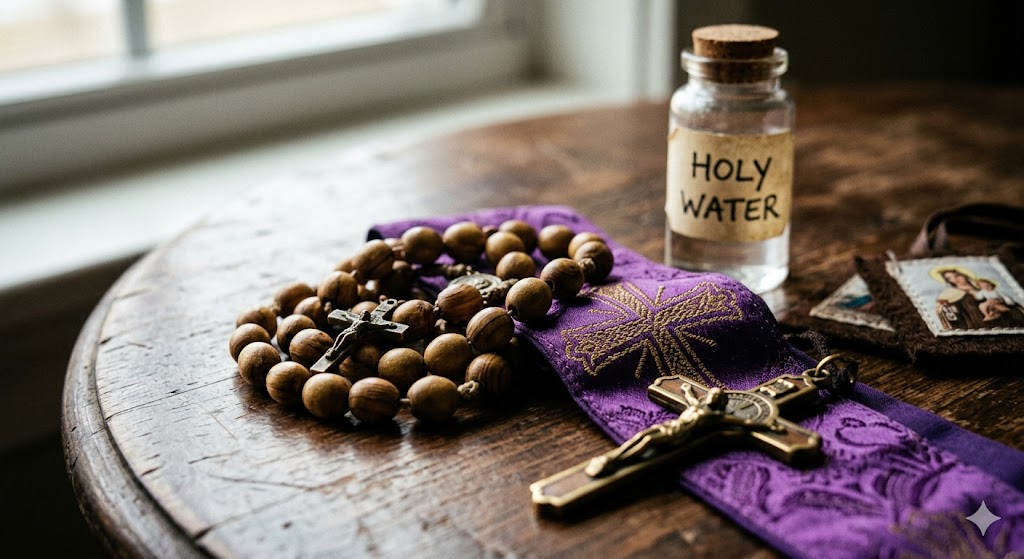
For the believer, the Sacraments of the New Covenant are considered necessary for salvation because they are the ordinary means by which Christ communicates His saving Spirit (CCC 1129). While Sacramentals (such as holy water, rosaries, or blessings) are not strictly necessary for salvation, they are highly beneficial “means to salvation.” They sanctify the various circumstances of life and direct material things toward the praise of God, helping the faithful on their journey toward heaven. For more on the necessity of Sacramentals, read our post on: What Are Sacramentals in the Catholic Church? here https://www.tabssacramentals.com.ng/what-are-sacramentals-in-the-catholic-church/
4. The number of Rites
While the mother Church is the guardian of both, there is a major difference in how many exist.
The number of Sacraments is fixed at exactly seven (Baptism, Confirmation, Eucharist, Penance, Anointing of the Sick, Holy Orders, and Matrimony) as defined by the council of Trent. Sacramentals, on the other hand, are not limited to a specific number. The Church has the authority to institute new sacramentals or retire old ones to meet the spiritual needs of the faithful in different cultures and eras ((CCC 1210, 1668).
5. The Minister
The ordinary minister of a Sacrament is typically an ordained member of the clergy (Bishop, Priest, or Deacon), though in extreme necessity, anyone can validly baptize. Sacramentals, while often administered by the clergy, can in many cases be administered by the laity. For example, parents may bless their children, in fact, in the Association of the Sacred Heart of Jesus and Immaculate of Mary Devotional prayers, there is a provision for parents to bless their children daily (Canon 1168).
6. The Requirement of Faith and Intention
According to the Council of Trent, Sacraments act ex opere operato (“by the work worked”). This means they are effective regardless of the righteousness of the priest, provided the proper form and matter are used. Sacramentals act ex opere operantis Ecclesiae (“from the work of the worker”). Their effectiveness depends heavily on the interior disposition, faith, and devotion of the person using them, as well as the intercessory prayer of the Church (CCC 1128).
7. The Effect on the Soul
In the teachings of the Church, three of the Sacraments (Baptism, Confirmation, and Holy Orders) confer a “sacramental character”—an indelible spiritual mark that can never be erased or repeated (CCC 1272-1274 Baptism, CCC 1304-1305 Confirmation), and CCC 1582 Holy Orders). On the other hand, no Sacramental has the power to leave such a mark on the soul; they are repeatable acts of piety intended to support the ongoing life of grace rather than change the ontological status of the person.
8. Physical Matter and Visible Signs
For a Sacrament to be valid, specific “matter” is required by divine law (e.g., water for Baptism, wheaten bread for the Eucharist). If the matter is wrong, the Sacrament does not happen. Sacramentals utilize a vast array of “pious objects” (scapulars, ashes, palms, candles) which are chosen by the Church to symbolize spiritual realities. While the objects are sacred, they are flexible signs meant to lead the heart toward the Sacraments.
9. The Recipient
Canonically, the Sacraments are reserved exclusively for practicing Catholics who have received the ‘gate way sacrament’ – Baptism; for example, one cannot validly receive the Eucharist or Matrimony without being a baptized Christian. Sacramentals, however, have a broader reach. According to Canon 1170, certain sacramentals, such as blessings, can be administered to non-Catholics and even catechumens, unless the Church has specifically decreed otherwise – thus making sacramentals a powerful tool for evangelization and outreach.
10. The Purpose and function
The primary purpose of a Sacrament is to confer grace directly—it is the source of the divine life. The purpose of a Sacramental is to dispose the faithful to receive that grace and to sanctify different circumstances of life. As the Second Vatican Council taught in Sacrosanctum Concilium, sacramentals “prepare men to receive the fruitful effect of the sacraments” and make holy “almost every event in their lives” (SC 60-61).
11. Relationship to the Paschal Mystery
Every Sacrament is a direct encounter with the Paschal Mystery (the Passion, Death, and Resurrection of Christ). They are the “masterworks of God” in the new and everlasting covenant. Sacramentals are auxiliary to this; they derive their power from the Paschal Mystery but act as “extensions” of the liturgical life of the Church, helping to bring the mystery of Christ into the home, the workplace, and the daily schedule.
12. Change in Form
Because the Sacraments were instituted by Christ, their essential “form” (the words said) and “matter” (the physical element used) are immutable; the Church cannot change the fact that Baptism requires water. Sacramentals are much more adaptable. The Church may alter the prayers, the signs, or the rituals of a sacramental to better fit the cultural context or language of the faithful in a particular region.
13. Scriptural and Apostolic Foundation
The seven Sacraments find their explicit or implicit roots in the New Testament and the immediate actions of the Apostles as recorded in Holy Scripture. Sacramentals, while often rooted in ancient tradition, have developed over centuries of Apostolic Tradition and Church history. They represent the “living breath” of the Church’s prayer life as she continues to apply the fruits of the Redemption to new generations.
Conclusion:
“Understanding the distinction between Sacraments and Sacramentals helps us appreciate the richness of Catholic life. While the Sacraments are the essential ‘engines’ of grace, the Sacramentals are the ‘environment’ that helps that grace flourish in our hearts.”
References
- Catechism of the Catholic Church (CCC)
- Code of Canon Law (CIC)
- Sacrosanctum Concilium (Vatican II)
- Catholic Answers
About TABS – Thomas Aquinas Bookstore and Sacramentals
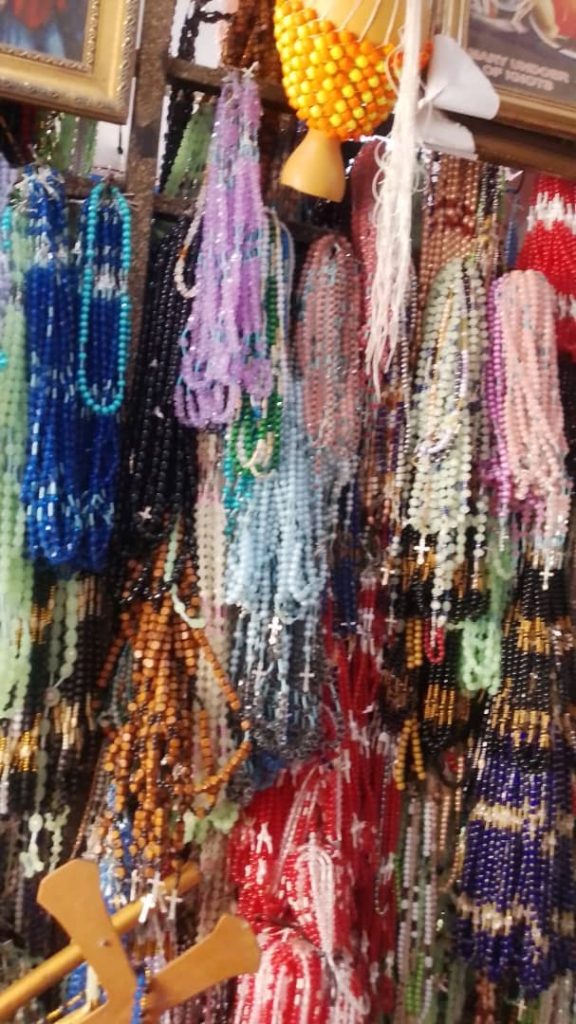
If you are looking for affordable and quality Catholic sacramentals in Nigeria, TABS – Thomas Aquinas Bookstore and Sacramentals is a trusted source for authentic devotional items that support and deepen the spiritual life. At TABS, we are committed to providing carefully selected sacramentals that encourage prayer, devotion, and faithful living in accordance with the teachings of the Catholic Church.
Tyosue Christopher Kpega is the founder of TABS – Thomas Aquinas Bookstore and Sacramentals, a Catholic platform dedicated to catechesis, liturgy, sacramentals, and authentic spiritual formation. Through TABS, he promotes sound Catholic teaching and provides quality sacramentals including rosaries, scapulars, crucifixes, holy water bottles, anointing oils, and sacred incense for prayer and Christian devotion across Nigeria.
Thank you for your rich clarifications
You’re welcome Mr. Charles and thanks for always engaging in our posts and for your continued patronage. Blessings