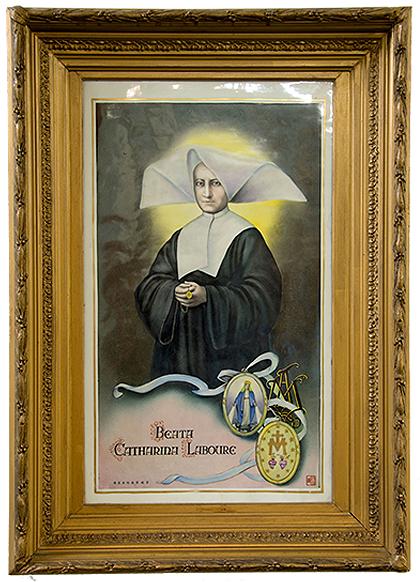
While millions of the faithful worldwide wear the Miraculous Medal, very few know the vessel through which the sacramental came to be: St. Catherine Labouré.
If you would like to learn more about what sacramentals are and their role in Catholic spiritual life, read our earlier article, What Are Sacramentals? here https://www.tabssacramentals.com.ng/miraculous-medal-facts/
As the evening Angelus bells rang out on May 2, 1806, Saint Catherine Labouré was born to Pierre and Madeleine Louise Labouré. Many Catholics lovingly see this as more than just a coincidence — almost as though Our Lady’s bells were welcoming the little girl who would one day become so closely connected to the Blessed Virgin Mary and the gift of the Miraculous Medal.
She was the ninth child in a family of eleven. She came from a comfortable farming family amid the rolling vineyards and countryside of Burgundy, France, and St. Catherine Labouré grew up in the village of Fain-les-Moutiers, near Dijon. Her father was an educated man and an excellent farmer.
Just fifteen minutes after her birth, Catherine’s name was officially registered in the city’s records. The following day, she was baptized on the feast of the Finding of the True Cross. Looking back on these events, we can see beautiful signs of God’s providence in her early life. The fact that she was born as the Angelus bells rang seems especially fitting for the young girl who would one day receive extraordinary graces from the Blessed Virgin Mary.
Her mother, Madeleine Louise Labouré, may not have known what the future held, but she gave special attention to her newborn daughter, who would later become known throughout the Catholic world. Even the day of Catherine’s baptism seems significant, for the cross would become a central part of her life. Through trials, sacrifices, and faithful service, St. Catherine Laboure’ learned to embrace the cross with love, developing a deep devotion to it and eventually receiving a remarkable vision connected to it.
At age 9, little Catherine lost her mother. After the burial, she went into her parents’ bedroom and used the chair as a stepping stone to climb, took the statue of our Blessed Virgin Mary from the shelf, kissed it, and said to her: “Now, dear Blessed Mother, you will be my mother”.
As she grew up, Catherine was known for her quiet and humble nature. She was a practical young girl who took her responsibilities seriously, yet her deep love for God and strong spirit of prayer set her apart from an early age.
God has Designs
On January 25, 1818, Catherine received her First Holy Communion, a moment that deepened her love for God and the Eucharist. From then on, she developed a profound spiritual discipline. Each morning, she would rise at 4:00 am, walk several miles to attend Mass, and spend time in prayer before the Lord.
Around this period, Catherine had a dream that she would never forget. In it, she saw an elderly priest celebrating Mass. When the Mass ended, the priest turned and beckoned for her to come closer, but she hesitated and stepped back, continuing to watch him. The scene then shifted to a room where the sick were being cared for. There, she saw the same priest again. He spoke gently to her, saying, “My child, caring for the sick is a good work. You turn away now, but one day you will be happy to come to me. God has a plan for you; do not forget it.”
When Catherine awoke, she did not understand the meaning of the dream. However, sometime later, while visiting the Daughters of Charity hospital, she noticed a portrait hanging on the wall. Pointing to it, she asked one of the Sisters who the priest was. The Sister replied, “That is our founder, Saint Vincent de Paul.” To Catherine’s amazement, it was the very same priest she had seen in her dream. Catherine immediately knew she would become a member of the Vincentian Order.
Catherine began formation at Daughters of Charity
In January 1830, Catherine Labouré began her formation as a postulant at the hospice of the Daughters of Charity in Chatillon-sur-Seine. Three months later, she returned to Paris to continue her training at the Motherhouse of the Daughters of Charity. It was during this period that God began to bless her with some extraordinary spiritual experiences.
Not long after arriving at the convent, Catherine received a series of visions. On three different days, she saw the heart of Saint Vincent de Paul above the reliquary containing his remains, and each time it appeared in a different colour. At other moments, she was also privileged to see Our Lord in a special way before the Blessed Sacrament; these experiences further strengthened her faith and prepared her for the important mission God had in store for her.
The First Apparition of St. Catherine Laboure’
On July 18, 1830, the eve of the feast of Saint Vincent de Paul, the Sister Superior spoke to the novices about the virtues of their founder and gave each of them a small piece of cloth from his surplice as a treasured keepsake. Deeply inspired, Catherine prayed fervently to Saint Vincent, asking for the grace to see the Blessed Virgin Mary.
For some reason, she felt strongly in her heart that her prayer would be answered that very night. As she slept, she was suddenly awakened by a bright light and the voice of a young child calling her name. “Sister Labouré, come to the chapel. The Blessed Virgin is waiting for you.”
Surprised, Catherine replied, “But we may be seen.”
The child reassured her, saying, “Do not be afraid. It is half past eleven, and everyone is asleep. Come, I am waiting for you.”
Catherine quickly got up and dressed. As she followed the child through the corridor, she noticed that the lamps were already lit. When they reached the chapel, the locked door opened at the touch of the child.
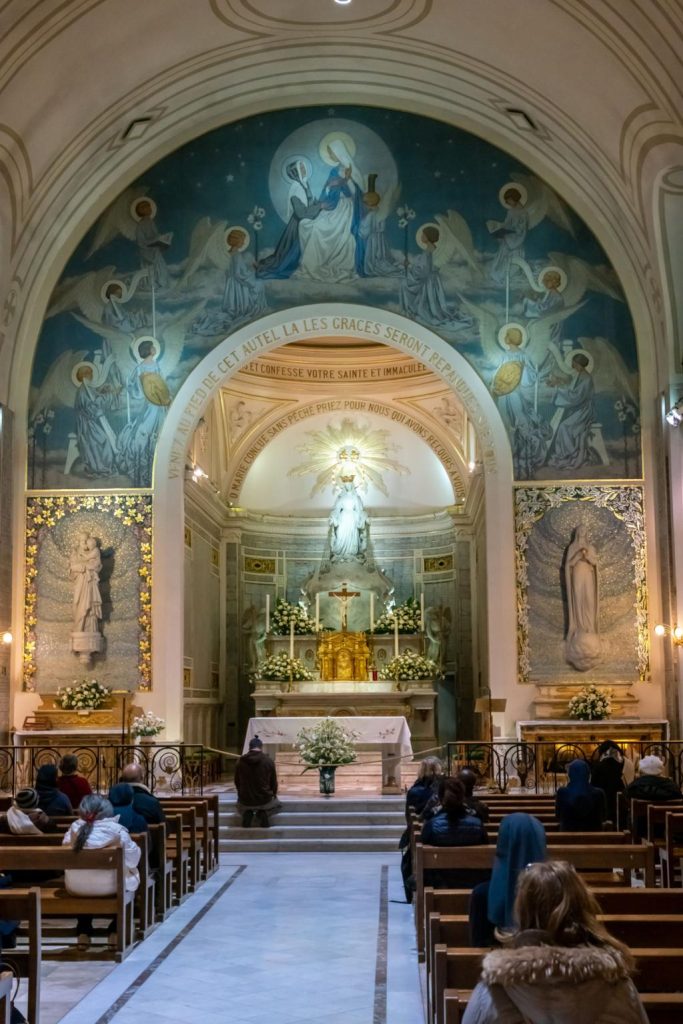
To her amazement, the chapel was brightly illuminated, as though it had been prepared for a solemn midnight Mass. Catherine knelt near the director’s chair and waited. Suddenly, she heard the gentle sound of a silk garment. Looking up, she saw the Blessed Virgin Mary seated in the chair, surrounded by heavenly beauty and light.
The child softly whispered, “This is the Blessed Virgin.”
Overcome with joy, Catherine rushed forward and knelt beside Our Lady, resting her hands on Mary’s lap like a child with her mother in a gesture one can link back to the prayer she made at the age of 9 asking the Blessed Virgin to be her mother henceforth.
The Blessed Virgin then spoke to her: “My child, God wishes to entrust you with a mission. You will face opposition, but do not be afraid. You will receive the grace needed to accomplish what God asks of you. Share with your spiritual director everything that takes place within your soul. These are difficult times for France and for the world.” (The difficult times referred to were probably the July Revolution, which overthrew King Charles X and happened a few days after the apparition).
As Mary continued speaking, Catherine noticed a deep sadness on her face.
“Come to the foot of the altar,” Our Lady said. “There, great graces will be given to all who ask for them with faith. God and Saint Vincent will protect you, and I will always watch over you. There will be much suffering ahead. The Cross will be rejected, and many trials will come.”
After speaking with Catherine for some time, the Blessed Virgin gradually disappeared from sight.
The child then led Catherine back through the corridor to the dormitory. When she reached her bed, the child vanished. As Catherine lay down, she heard the clock strike two in the morning. Though the night had passed, the memory of that extraordinary encounter would remain with her forever.
The Second Apparition of St. Catherine Laboure’
On November 27, 1830, during evening meditation, the Blessed Virgin Mary appeared to Catherine again and entrusted her with a special mission. In the vision, Catherine saw Our Lady standing on what looked like a globe. Mary was also holding a golden globe in her hands and lifting it towards heaven as an offering to God.
Mary explained to St. Catherine Laboure’ , “The globe you see represents the whole world, especially France, and every person in it.”
At that time, France was passing through many difficulties, and it was often the poor who suffered the most. Many of the troubles that began in France would later spread to other parts of the world.
As St. Catherine Laboure’ continued to look, she noticed brilliant rays of light shining from the rings on Mary’s fingers. The rays spread in every direction and filled the vision with beauty. Our Lady explained, “These rays represent the graces I obtain from God for those who ask for them.”
Catherine also noticed that some of the precious stones on the rings were not giving off any light. Mary then told her, “The stones that do not shine represent the graces that people fail to receive because they do not ask for them.”
This vision reminds us of an important lesson; God desires to bless His children abundantly, but many times we miss out on certain graces simply because we do not turn to Him in prayer and ask with faith.
The Third Apparition and the Miraculous Medal
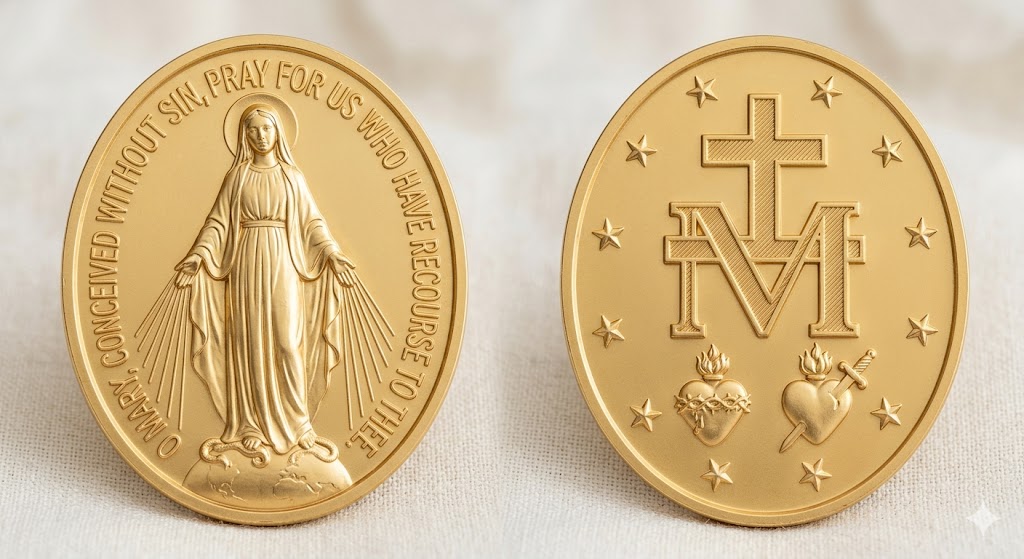
The vision then changed once again. Catherine saw the Blessed Virgin Mary standing on a globe with her arms stretched out. Bright rays of light were still shining from the rings on her fingers. Around the image of Our Lady appeared these words:
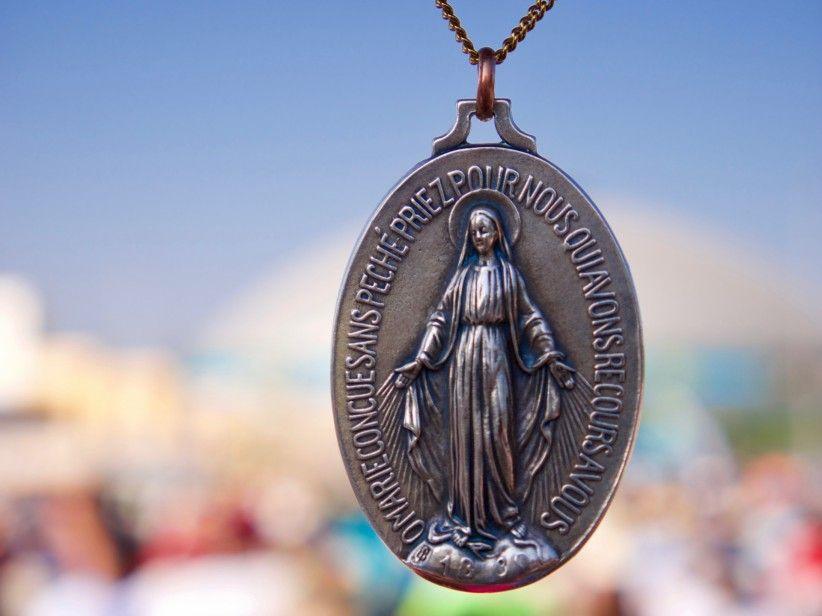
“O Mary, conceived without sin, pray for us who have recourse to thee.”
This inscription would later become one of the most important parts of the Miraculous Medal
The Mission
Our Blessed Mother Mary instructed Catherine: “Have a medal struck after this model. All who wear it will receive great graces; they should wear it around the neck.”
The Miraculous Medal
During the apparition, the Blessed Virgin Mary gave Saint Catherine a special instruction. She said, “Have a medal made according to this design. Those who wear it will receive great graces, especially if they wear it with faith and confidence.”
To learn more about the history, promises, and spiritual significance of the Miraculous Medal, read our article 15 Powerful Secrets of the Miraculous Medal: https://www.tabssacramentals.com.ng/miraculous-medal-facts/ttps://www.tabssacramentals.com.ng/miraculous-medal-facts/
Catherine faithfully shared everything she had seen and heard with her confessor. Through his guidance and support, the message of Our Lady was eventually carried out. However, Catherine remained humble and hidden. She did not publicly reveal that she was the Sister who received the apparitions until shortly before her death, forty-six years later.
The devotion to the Miraculous Medal spread very quickly after it was first distributed in Paris. One of the major reasons for its rapid growth was the cholera epidemic that struck the city in 1832. During this difficult period, many sick people received the Miraculous Medal from the Daughters of Charity. As reports of healings, conversions, and other remarkable favours began to spread, people started referring to it as the “Miraculous Medal.”
Several factors helped to increase devotion to the medal. During the cholera outbreak, which claimed the lives of thousands of people in Paris, the Daughters of Charity distributed about 2,000 medals to those who were suffering. Many testimonies soon emerged of people receiving protection, healing, and spiritual comfort through their devotion to the medal.
Interest in the medal grew even more when Father Jean-Marie Aladel, the spiritual director of Saint Catherine Labouré, published a booklet in 1834 explaining the apparitions and the origin of the medal. This helped many people to better understand the message entrusted to Saint Catherine by the Blessed Virgin Mary.
The Church also played an important role in promoting devotion to the medal. In 1836, after a careful investigation, Church authorities in Paris approved the devotion and declared that the events surrounding the medal were worthy of belief.
Above all, the spread of the Miraculous Medal was inspired by the promise of the Blessed Virgin Mary herself. During the apparitions of 1830, Our Lady assured Saint Catherine that those who wear the medal with faith and confidence would receive abundant graces from God through her maternal intercession.
The Meaning of the Front Side of the Miraculous Medal
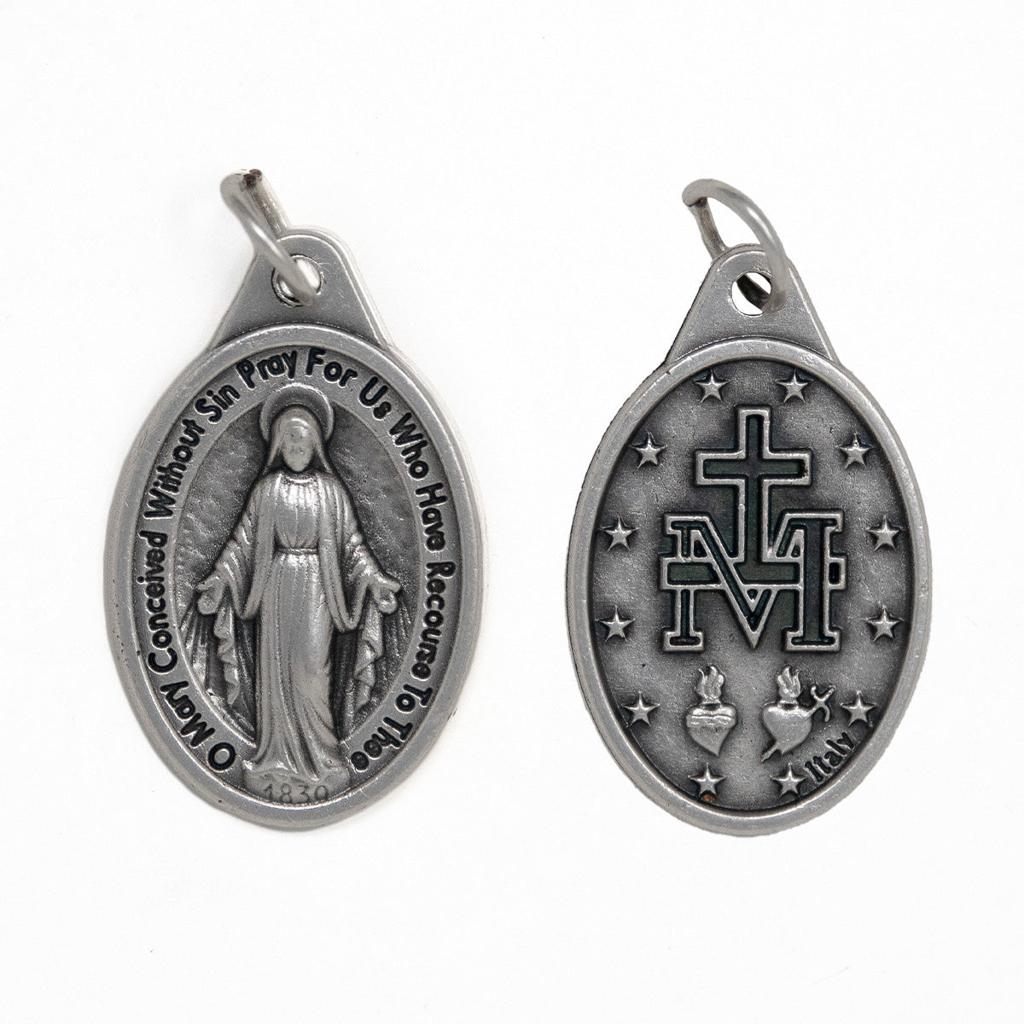
On the front of the Miraculous Medal, our Mother Mary is shown standing on a globe while crushing the head of a serpent beneath her feet. The globe represents her role as Queen of Heaven and Earth, while the serpent symbolizes Satan. By crushing the serpent, Our Lady shows the victory that God has given over sin, evil, and the devil, fulfilling the promise found in Genesis 3:15.
The date 1830 on the medal reminds us of the year when the Blessed Virgin Mary revealed the design of the Miraculous Medal to Saint Catherine Labouré.
The words “O Mary, conceived without sin” point to the Church’s teaching on the Immaculate Conception. This should not be confused with the Virgin Birth of Jesus. The Immaculate Conception means that, by a special grace from God, Mary was preserved from original sin from the very first moment of her existence. This truth is reflected in the angel Gabriel’s greeting to her as “full of grace” (Luke 1:28). Although the apparition took place in 1830, the dogma of the Immaculate Conception would be officially proclaimed by the Church twenty-four years later, in 1854.
The meaning of the back side of the miraculous medal
The Cross and the “M”
The “M” stands for Mother Mary, and the way it’s joined together with the Cross of Jesus shows the inseparable union that exist between the Son and the Mother. It reminds us how she stood by Him and shared in His suffering on the Cross. Then that line passing under the cross represents the earth and the altar.
The Two Hearts
One observes the two hearts side-by-side: The Sacred Heart of Jesus (with thorns all around it) and the Immaculate Heart of Mary (with a sword piercing through it). This shows the love both Jesus and Mary have for all of us.
The Twelve Stars
The twelve stars that form a circle around the whole image represent the Twelve Apostles and the entire Church.
The Silent Saint
We may think that someone so blessed by Heaven would naturally become famous or receive great honour. But Saint Catherine Labouré did not seek any attention. In fact, she avoided it completely. She preferred to live quietly and faithfully, carrying out her simple duties as a Daughter of Charity.
For more than forty years, she devoted her life to caring for the elderly and the sick. All this time, she never told anyone around her that she was the sister who received the visions of Our Lady and the Miraculous Medal.
In 1876, Catherine had a strong inner feeling that she would not live beyond that year. As her final days approached, the Blessed Virgin Mary gave her permission to speak after keeping silent for 46 years. She then opened up to her Superior and revealed that she was indeed the sister chosen to receive the apparitions of Our Lady.
On the last day of December 1876, Saint Catherine Labouré passed away peacefully, going to meet Mary once again—this time in heaven.
Even after her death, her story continued to inspire many. In 1933, when her body was exhumed, it was found still remarkably fresh and well-preserved. Although she had died at the age of 70 and had been buried for 57 years, her appearance remained peaceful, her features intact, and her body still soft as though she were simply sleeping.
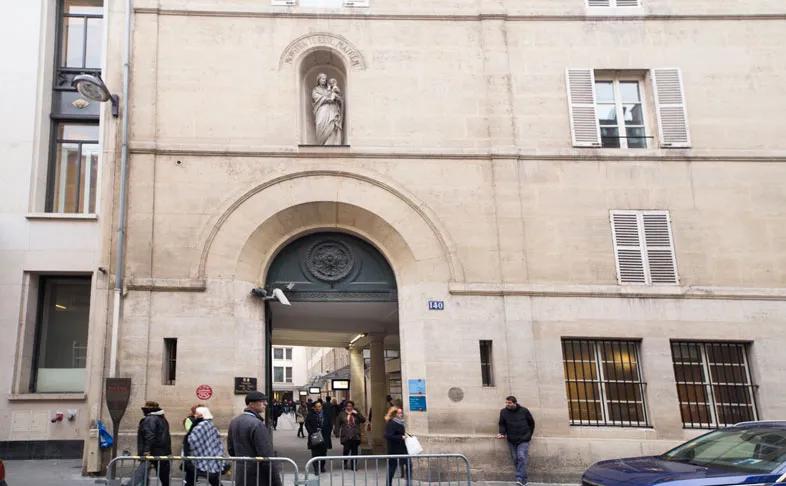
Today, her incorrupt body is kept in a glass coffin beneath a side altar at 140 Rue du Bac in Paris, right where Our Lady appeared to her. Pilgrims from all over the world still go there to see the face of the humble saint who kept silent for 46 years, carrying a message that has touched countless lives.
Beatification and Canonization
Pope Pius XI declared her venerable in 1931 and beatified her on May 28, 1933, shortly after her incorrupt body was discovered.
On July 27, 1947, she was formally canonized as a saint by Pope Pius XII.
References
- Dirvin, Joseph I. Saint Catherine Labouré of the Miraculous Medal. Tan Books, 1984.
- Laurentin, René. The Life of Catherine Labouré. Collins, 1980.
- Catholic Church. Catechism of the Catholic Church. Vatican City: Libreria Editrice Vaticana, 1993. (Section 1674 on Popular Piety and Sacramentals).
- https://vinformation.org/en/miraculous-medal-shrine-reflections-three-apparitions-of-mary/
If you desire authentic Catholic sacramentals in Nigeria, TABS – Thomas Aquinas Bookstore and Sacramentals is committed to providing affordable and quality sacramentals that support and deepen the spiritual life of believers. Through these sacred signs of devotion, Catholics are continually drawn closer to God and to the rich spiritual traditions of His Church.
Tyosue Christopher Kpega is the founder of TABS – Thomas Aquinas Bookstore and Sacramentals, a Catholic platform dedicated to catechesis, liturgy, sacramentals, and authentic spiritual formation. He is passionate about helping Catholics grow in faith through sound doctrine, devotional spirituality, Catholic classic literature, and the sacred sacramental traditions of the Church. Through TABS, he also provides quality sacramentals including rosaries, scapulars, anointing oils, crucifixes, holy water bottles, and sacred incense for prayer, liturgical use, and Christian devotion across Nigeria